News

Jurjen Burghgraef
Director of JB Risk Management
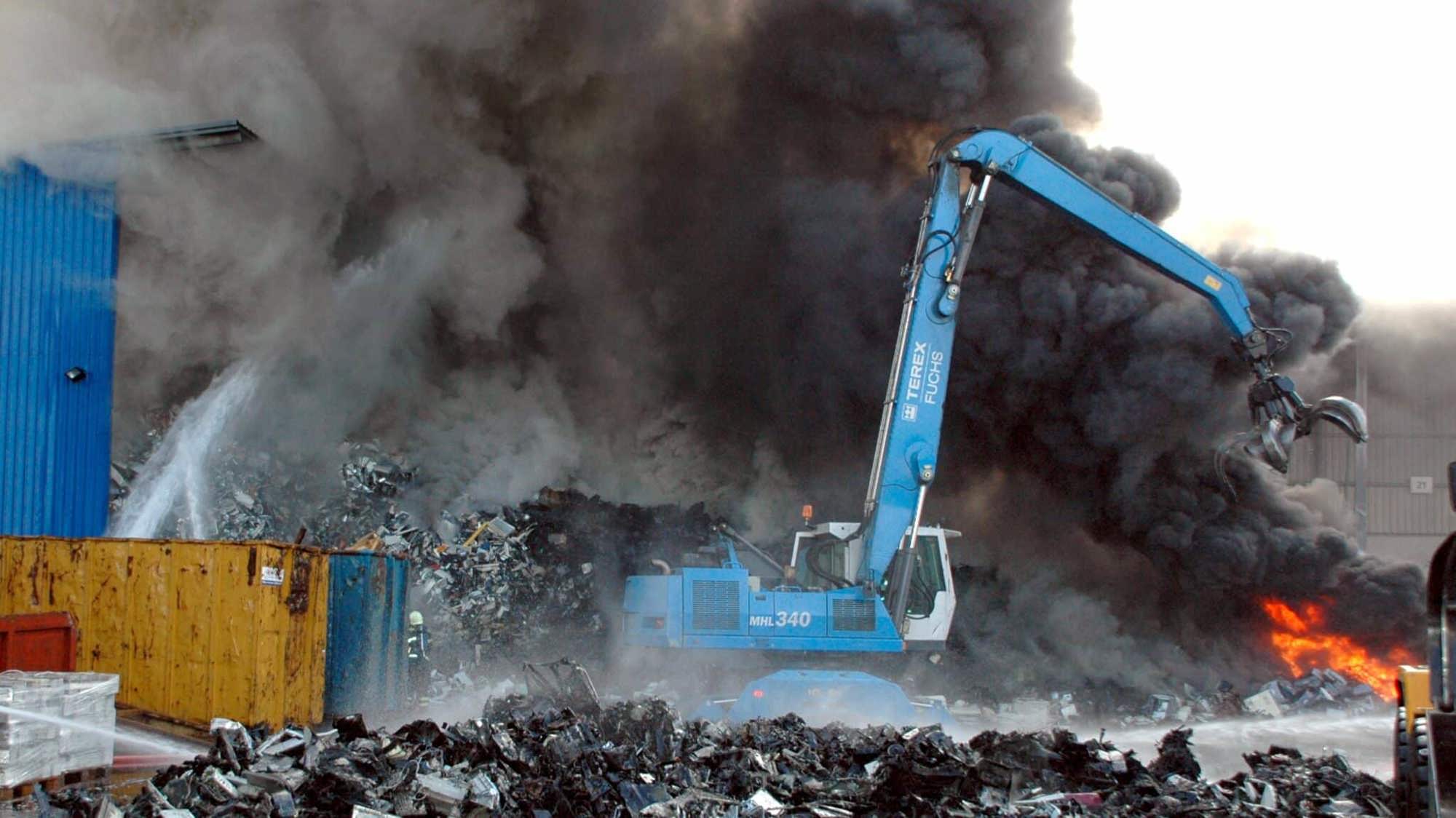
The recycling sector has been facing increased fire risks for quite some time now. As early as 2015, explicit attention was drawn to this development within the waste industry under the heading of rising fire risks in the recycling sector. At that time, the sector was still broadly insurable and relatively favourable insurance conditions generally applied.
This picture changed dramatically in 2017 and 2018. During this period, the sector was hit by a large number of fires, often with a significant level of damage. Claim payouts structurally exceeded the premiums received, causing a major part of the insurance market to withdraw – whether temporarily or otherwise – from the recycling sector. From 2018, initiatives re-emerged to make recycling companies insurable, but exclusively under significantly stricter conditions. Higher premiums, increased excesses, and far-reaching prevention requirements became the new standard.
Developments since 2018
During the period from 2018 up to and including 2025, the number of fire incidents within the recycling sector has remained relatively stable. However, this does not mean that fire risk can now be considered manageable. Several large fires still occur annually, causing severe damage to buildings and installations. On a positive note, fire prevention has taken a more prominent place on the agenda in recent years. At the same time, it must be noted that prevention is not yet sufficiently structurally embedded in the business operations of some companies. The sector has taken clear steps forward but is not yet where it should be.
Practical experience and approach
Recent practical experiences, based on visits to nearly one hundred recycling companies, show that not every situation is insurable. In a limited number of cases, the risk profile proved so unfavourable that it was not possible to issue an insurance proposal. The starting point is always that pre-established minimum requirements in the area of risk management and fire prevention must first be met. For the majority of companies, insurance solutions have indeed been realised, often in combination with additional preventive improvements. Sustainability plays an important role in this. After all, recycling companies fulfil an essential social function within the circular economy. However, that role can only be fulfilled in a future-proof manner when risks are demonstrably and structurally managed.
Technology as a starting point
An effective approach to fire risks starts with technology. The first step is always a detailed risk analysis, in which processes, material flows, and structural aspects are comprehensively assessed. Only at a later stage does the question of insurability arise: under what conditions, and which components are or are not insurable. This order is essential. Insuring must never be the starting point, but rather forms the final piece of demonstrable risk management. In recent years, this approach has resulted in a growing number of recycling companies becoming insurable again, and under better and clearer conditions.
Differentiation in risk profiles
An important starting point in risk assessment is differentiation. Recycling companies differ greatly in their activities and, consequently, in their risk profiles. Companies where hardly any flammable materials are stored indoors face a significantly lower fire risk and can generally be insured under relatively favourable conditions. For other types of companies, the risk is significantly higher, particularly for:
construction and demolition waste processors;
commercial waste processors;
household waste processors.
Within these categories, lithium batteries form an increasingly dominant source of risk. Every day in practice, large quantities of batteries are removed from waste streams, often originating from regular waste where they do not belong. In addition, vapes, nitrous oxide cylinders, and aerosol cans with highly flammable contents pose a substantial risk. These products regularly lead to fire incidents during storage, transport, or processing.
Prevention starts at the source
Effective fire prevention does not begin solely at the recycling company itself, but already at the source: the citizen and the producer. Education, awareness, and clear collection structures are crucial. Campaigns pointing consumers to the library and correct disposal channels for batteries and other high-risk products demonstrably contribute to risk reduction. There are also opportunities at policy level. Products such as nitrous oxide cylinders are now banned, but remain relatively easy to obtain and lack a solid collection structure. Without a deposit system or mandatory return, it is inevitable that these products end up in household waste, with all the associated risks. In addition to external ignition sources, self-heating remains a structural risk, particularly in waste streams with an organic component. If the turnover rate is insufficient, heat build-up can lead to spontaneous combustion. This requires active flow management, combined with detection systems that signal temperature rises at an early stage.
Effective measures make the difference
Prevention measures must align with the specific risk profile of the company. For waste streams where risk sources cannot be completely ruled out, the emphasis is on:
early separation of high-risk materials;
smaller and well-designed fire compartments;
reliable detection systems;
automatic and effective fire suppression systems.
In practice, however, it appears that not all measures are actually effective. Detection systems sometimes trigger too late, extinguishing installations are insufficiently tailored to the fire scenario, or compartmentalisation falls short. Effectiveness is more important here than formally ticking off measures.
Complying with regulations is not enough
It is often argued that the Besluit bouwwerken leefomgeving (BBL, formerly the Dutch Building Decree) is complied with, and that the situation is therefore acceptable. From the perspective of the competent authority, this is understandable, as the BBL is primarily focused on preventing casualties. However, for business continuity and insurability, this is insufficient. Fire incidents within the sector demonstrate that additional preventive measures are necessary. At the same time, it is undesirable to impose generic, highly stringent requirements that do not do justice to the great diversity within the recycling sector.
Call to the sector
The advice to recycling companies is clear: have an independent risk analysis carried out periodically, invest in demonstrably effective prevention measures, and limit the long-term storage of fire-prone waste streams. Meeting statutory minimum requirements is no guarantee of a manageable risk profile. Prevention remains better than cure. That is not only in the interest of individual companies, but of the entire recycling sector. Developments are positive and insurance solutions are improving, but structural attention to fire prevention remains essential for a sustainable and insurable future.
This article appeared on 9 April on www.bewerken-online.